Finding the Ocean State of Mind: Mastering the Art of Slow Travel
At Explora Journeys, we believe time is life’s greatest luxury—time to explore, connect and simply be. To find true peace, we must first learn to slow down. First-time ocean traveller Joe Mortimer slid unknowingly into the Ocean State of Mind during a seven-night Journey among Aegean islands and the storied harbours of the Peloponnese.
Theodorakopoulos Christos stops his taxi halfway down the road on a thin strip of sand dunes separating Gialova Lagoon from the Bay of Navarino – the site of the last ever major naval battle fought in the Age of Sail. With a mixture of nostalgia and pride, the taxi driver, olive farmer and former marine engineer has been telling me about his early life at sea and eventual return to his beloved homeland in Messinia, the southwestern corner of the Peloponnese. It only occurs to me later that I am talking to a real-life Odysseus.
Pointing to a spot on the map on the far side of the lagoon, I ask him to meet me in two hours and drive me back to Pylos. “No, my friend,” he tells me with a friendly pat on the arm. “You must not rush. Call me when you are ready and I will come in 30 minutes.” The plan was to walk the coastal path around the lagoon — a vast Natura 2000-protected wetland sanctuary for thousands of migratory birds, flamingos, turtles and rare African chameleons — and hike up to the hilltop ruins of Old Navarino Fortress and Nestor’s Cave, where the Greek god Hermes hid the cattle he stole from Apollo, for views of the legendary omega-shaped Voidokilia Beach, a picture-perfect inlet flanked by limestone cliffs.
But the best-laid plan quickly withers when I step blinking from coastal woodland onto Chrysi Akti, a 4km arc of golden sand that stretches from Gialova town on one side to the island of Sphacteria on the other. Five small yachts are moored in the shallows, but there’s not a soul in sight. In the distance, I can see EXPLORA II on the other side of the bay, her deep-blue hull and swept-back funnel creating the illusion of perpetual motion across the waves.
Something unspoken stirs and I stop to sit and listen to the silence. Wading out into the cool ocean, I can see shells and a tiny crab through crystal clear water. I float in absolute quiet, soothed by the saline waters of the Ionian Sea and healed by the warm sun. Time stops. Sprawled out on the deserted beach, drying in the sun, an unfamiliar feeling of tranquillity sets in, as I slide, unknowingly, into the ‘Ocean State of Mind’.


The Ocean
Until very recently, my relationship with the ocean has been defined by fleeting moments: mackerel fishing off the Dorset coast with my grandad, zipping between container ships near the port of Fujairah, jumping the slow ferry to Nicaragua’s Corn Islands and a couple of nights drifting between the limestone monoliths of Vietnam’s Ha Long Bay. I had never embarked on a serious ocean voyage. Maybe I was just waiting for the right opportunity.
That opportunity came in the form of a seven-night voyage with Explora Journeys, travelling from Athens, the cradle of Ancient Greece, into the Aegean, the mother of all seas; hopping from sleepy islands and the rugged shores of the Peloponnese coast to the vineyard-covered hillsides of Puglia, before the return voyage to Athens over a full day at sea.
When plans were confirmed, I was immediately captivated by the romance of ocean travel. The route called to mind the journey of Odysseus – albeit with significantly more creature comforts aboard and fewer existential threats at sea and ashore – and in the days leading up to departure, several things excited me as a first-time cruiser. Firstly, there was the concept itself: the prospect of checking into a floating luxury hotel, unpacking for seven nights and visiting six destinations without having to board a plane filled me a giddy joy. The second was the simple pleasure of arriving in new destinations by sea, watching islands appear on the horizon and shorelines disappear in our wake.
Thirdly, perhaps most excitingly of all, was the idea of disconnecting; of physically moving away from earthly cares as we cast off into the blue and tune into the more reflective rhythm of slow travel. Explora Journeys describes this as the ‘Ocean State of Mind’, a feeling of freedom and tranquillity brought on by being close to the sea, slowing down and taking advantage of the endless assortment of hospitality and entertainment on board. If I was going to embrace this new mindset, I would need to learn the art of going slow.


The Ship
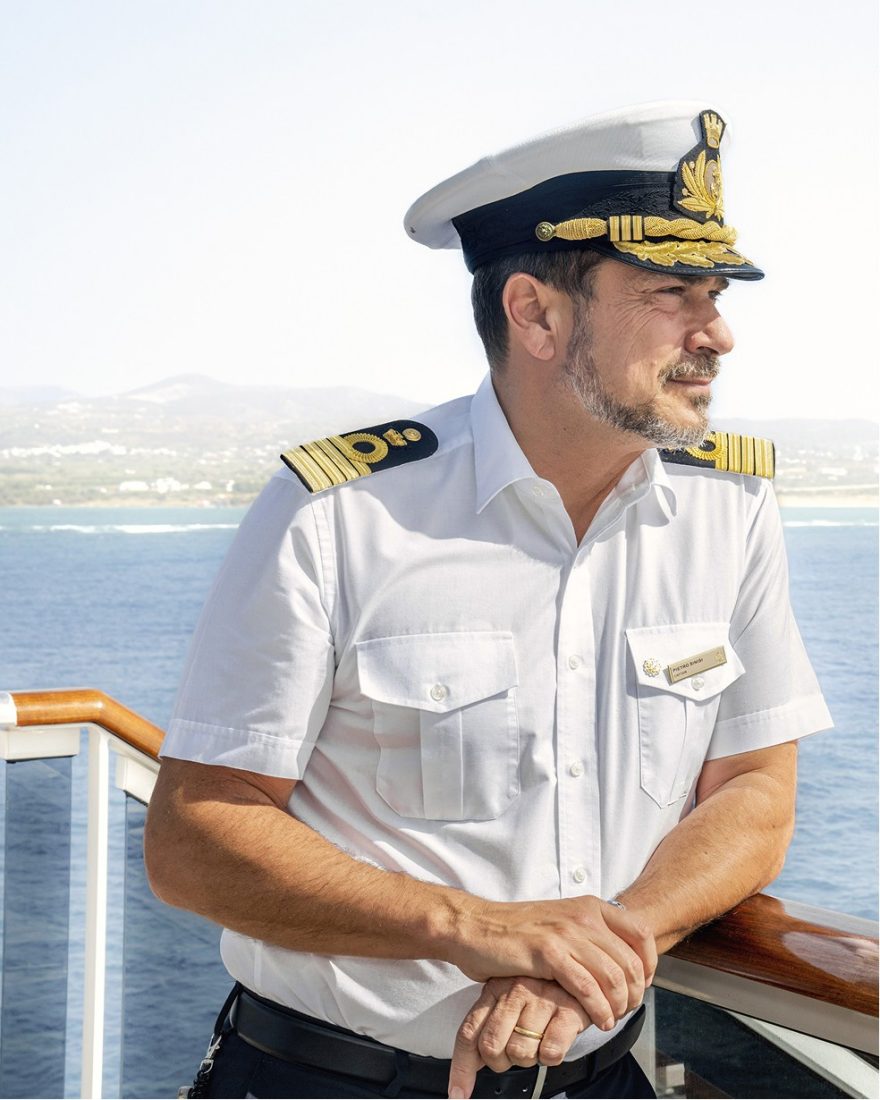
I’m travelling aboard EXPLORA II, launched in September 2024 as the second ship in the Explora Journeys family, commanded during my journey by Captain Pietro Sinisi. As a first-time ocean traveller, I can’t compare to other cruise ships, so my frame of reference is something I know well: luxury hotels. There was an understandable sense of anticipation during embarkation in Athens and a seamless security and onboarding process before check-in and a safety briefing in the Journeys Lounge – which transforms each evening into a stage for live entertainment.
With a glass of Champagne in hand, new arrivals gravitate towards the Lobby Bar – a soaring space that feels every bit like the lobby of a grand urban hotel, framed by Cartier, Panerai and Piaget boutiques, and a curated collection of travel-inspired apparel and accessories at The Journey. One deck up on the open mezzanine, Crema Café will quickly become my preferred spot for pre-dinner aperitivo, and the adjacent Galleria d’Arte, curated in partnership with Clarendon Fine Art in London, is a natural pause between the Astern Pool & Bar and some of the ship’s excellent restaurants. There’s Asian fusion-focused Sakura, modern steakhouse Marble & Co. Grill, fine French at Fil Rouge, ocean-inspired Med Yacht Club; worldly flavours at Emporium and the refined Italian tasting menus of Anthology, curated by Executive Chef Frank Garanger. Without exception, they are fabulous.
My Ocean Terrace Suite – one of 456 suites on EXPLORA II – is well appointed and thoughtfully laid out, with a walk-in wardrobe, complimentary daily mini bar and lots of intuitive touches like a Dyson hairdryer, binoculars and wireless bedside chargers. The terrace quickly becomes my favourite part of the suite, multi-tasking as lounge, office and setting for a lazy in-suite breakfast.
Each morning, I am the proverbial kid at Christmas, racing to throw open the curtains and see what new sight dawn has delivered. There are two clear winners for best morning view: the little Peloponnese port of Pylos, framed by the perfect cone of Mount Tavolaki, and Nydri on the island of Lefkada, where a thin ribbon of whitewashed homes separates the rugged hillside from the electric blue of the Ionian Sea.

The Journey
I am a restless traveller. My heart is an advocate of immersive, slow travel: wandering off the beaten path and taking the time to let a place get under your skin. But my head is a travel maximalist that thrives on well-structured plans and pinpoint precision; beholden to a mental route map that shapes each day. So this journey of six destinations in seven nights presented a challenge. Part of me leans towards exploring each port to the full and squeezing every bit of value from my time ashore. But I learn eventually that to do so is to miss the point. An Explora Journeys itinerary might be selected based on the harbours it visits, but just as important is where the journey takes you inwardly as well as physically.
As soon as I accept this, the voyage takes on its own natural momentum. Looking back, it feels like a waking dream; each harbour is remembered as a series of vignettes, reordered by the confounding chronology of the ocean. Early morning in Mykonos, wandering the labyrinthine alleyways and bright white streets, deserted except for shopkeepers. Windmills standing tall and quiet on their promontory and the little bay where a solitary swimmer basks in the clear sea.
Hiking up to Hozoviotissa Monastery, etched into the cliffs of Amorgos Island; the postcard views of Agia Anna beach and the cobalt blues of the Aegean. Further inland, wandering among the red-roofed windmills of Chora, where silence is profound, and a long lunch in the shade while unexpectedly stylish priests and hopeful cats amble by. And zipping around the quiet coves of the Princes Islands off the coast of Lefkada in a rented speedboat, skirting Skorpios, the private island where Aristotle Onassis married Jackie Kennedy in 1968, and nosing into Papanikolis Cave on Meganisi, legendary home of sea spirits and nymphs.
And then there was Pylos.
That moment, on Chrysi Akti, was the first time I really deviated from the plan, allowing myself to be carried by the rhythm of day. Christos the driver was right: this shouldn’t be rushed. Eventually I hike the lagoon trail and true to his word, Christos picks me up half an hour after I call him from the fine white sands of Voidokilia Beach. I have a lazy lunch under the plane trees in Pylos town and spend the afternoon wandering around the pine-scented grounds of the New Navarino Fortress, where EXPLORA II appears again, far below in the bay; a reassuring presence throughout the journey. But it was that unplanned moment on Chrysi Akti that stays with me – the unexpected feeling unlocked by stopping to enjoy the luxury of time.


Home at Sea
Aboard EXPLORA II, little interludes inspire a similar state: early morning coffee on the terrace, soaking in whatever view the sunrise has revealed. A swim in one of the five pools when I return from the shore and lounge poolside as the ship begins the next leg of the journey. Watching the wake, trailing back towards the sunset; a slightly flatter stretch of ocean, smoothed by the ship’s passage. The sea under a full moon, silver on black, and the gentle churn of waves below as EXPLORA II carves her path.
One morning, when most of the passengers have already disembarked to meet the legendary orecchiette-making ‘nonnas’ of Bari, I join a handful of other passengers on a guided tour of EXPLORA II’s Bridge.
Surrounded by navigation equipment, screens and enough lights, dials and buttons to make the cockpit of an A350 look positively mundane, Captain Sinisi tells us about some of the sea trials EXPLORA II underwent before being handed over by Italian shipbuilder Fincantieri in Genoa. One of the most significant tests is the crash stop, which measures the time and distance it takes the ship to reach a complete halt from maximum speed. EXPLORA II achieved this, says the captain with pride, in around six minutes and just under two kilometres. Which, for a 248-metre ship weighing almost 64,000 tonnes, is very fast indeed.
Alas, we are not all wired with advanced technology and precision engineering. For most of us, it takes time to slow down; to unlearn the busy-ness of life and acquire the art of going slow. When the daily grind is unrelenting, it is unreasonable that we put the same pressure on ourselves when travelling. Yes, curious minds yearn for meaningful experiences, especially when travelling. But life is also the other stuff: the quiet times in between. True fulfilment is usually found when you stop and listen. That contented sigh when you sip a cold glass of rosé under the bougainvillea or sit down under a Cycladic windmill and listen to the rustle of tall grasses. We must of course remain curious, but not all the time. Sometimes, I have learned, we must pause, take a moment and surrender to the ‘Ocean State of Mind’.
Looking back, it feels like a waking dream; each harbour is remembered as a series of vignettes, reordered by the confounding chronology of the ocean.”

Journeys Across the Greek Isles
More Stories
The Ships
• 6 min read
Explora Journeys Luminary Annabel Croft on Travel, Wellness and the Luxury of Time
The Ships
• 8 min read
First-Time Tips: Top Things to Know Before Your First Ocean Journey
The Ships
• 9 min read
The Sea as Teacher: Captain Pietro Sinisi on a Career Guided by the Horizon
The Ships
• 4 min read
A Life Beneath the Surface - Cristina Ozores on Becoming Godmother of EXPLORA III
The Ships
• 7 min read
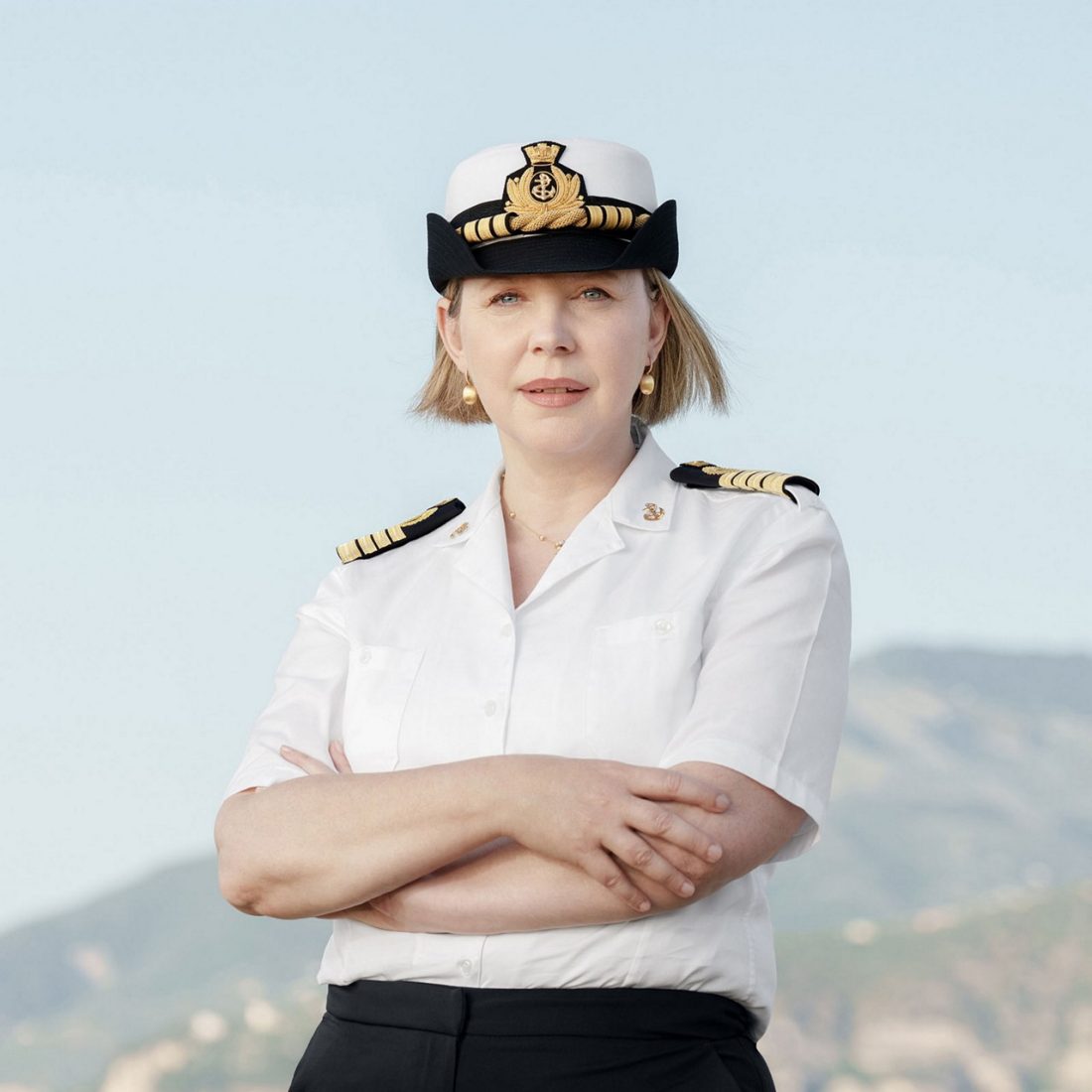
At the Helm of EXPLORA III
The Ships
• 4 min read